
A Vital Ecosystem in Crisis
The Mau Forest Complex is Kenya’s largest afro-montane forest, spanning over 403,000 hectares. It serves as a critical water tower and is the source of 12 major rivers that sustain ecosystems such as Lake Victoria, Lake Nakuru, and the Maasai Mara–Serengeti wildlife landscape.
Yet the forest has been under intense pressure from illegal logging, charcoal production, encroachment, forest fires, overgrazing, and weak governance. Because of these threats, its ecological services — including the supply of clean water, climate regulation, biodiversity conservation, and support for local livelihoods — are at serious risk.
The Launch of a Transformative Initiative
In response to this urgency, the Government of Kenya has launched the Mau Forest Complex Integrated Conservation and Livelihood Improvement Programme (MFC-ICLIP) — a 10-year, KES 21.5 billion initiative aimed at restoring degraded landscapes and improving livelihoods across the Mau Forest Complex.
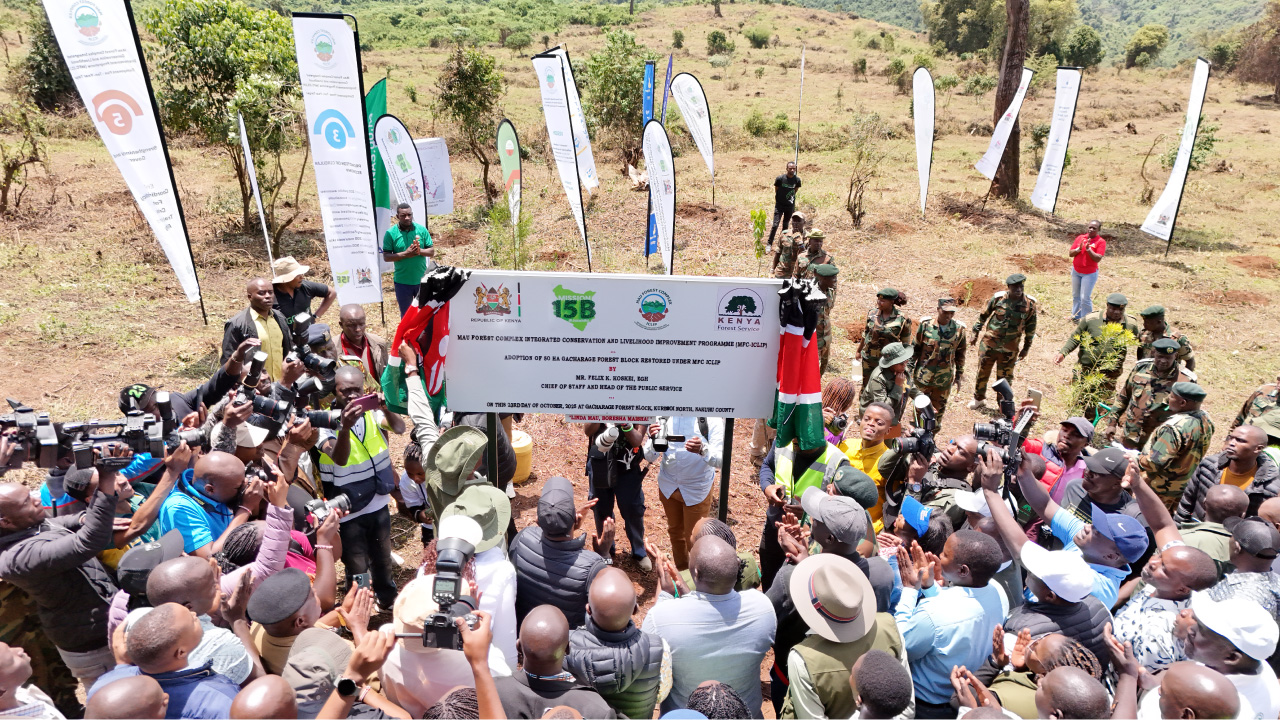
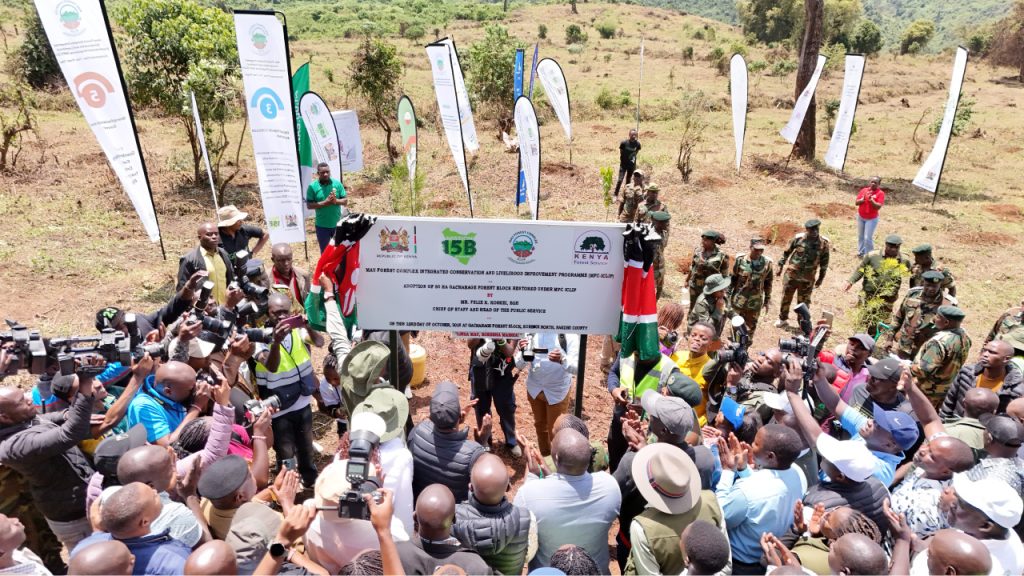
The official launch took place in late October 2025 in Kuresoi North, Nakuru County, graced by President William Samoei Ruto, Principal Secretary Dr. Eng. Festus K. Ng’eno, county leaders, and community representatives. The event marked the beginning of a unified effort to secure one of Kenya’s most vital ecosystems.
Vision and Strategic Focus
The programme envisions a restored and sustainably managed Mau Forest Complex that continues to deliver ecosystem services while creating green jobs and sustainable livelihoods for communities.
Key elements of the strategy include:
- Restoring 33,138 hectares of degraded forest and 668.7 hectares of wetlands over ten years.
- Fencing and securing forest boundaries, creating buffer zones, and rehabilitating wetland and riparian areas.
- Supporting nature-positive value chains such as honey, avocado, dairy, and pyrethrum farming.
- Promoting renewable energy solutions, circular economy practices, and environmental education initiatives.
Why Now Matters
The launch represents a turning point. For decades, restoration efforts in the Mau have been fragmented, under-funded, or short-term. MFC-ICLIP introduces a holistic approach that integrates conservation with livelihoods, climate resilience, and inclusive governance.
As Cabinet Secretary Dr. Deborah Barasa noted during the launch:
“Every tree planted is a promise – a promise of hope, food security, clean water, and a resilient economy.”
Early Activity and Momentum
Although still in its early stages, the programme has already achieved several key milestones:
- Over 150,000 seedlings have been grown in nurseries ahead of large-scale restoration.
- Major institutions such as the SACCO Societies Regulatory Authority (SASRA) have contributed, donating 1,500 indigenous seedlings during the launch.
- A block-by-block model has been introduced, with investment estimates of about KES 2 million per 10-hectare block for clearing, planting, fencing, and maintenance.
These early activities reflect the programme’s strong foundation and growing partnerships.
Stakeholder Collaboration at the Heart
A defining strength of MFC-ICLIP is its multi-stakeholder design. The initiative brings together national and county governments, local communities, private sector actors, NGOs, research institutions, and development partners.
County governments such as Nakuru have adopted forest blocks for rehabilitation, integrating education, green job creation, and monitoring into their local strategies. The programme also aligns with Kenya’s National Landscape and Ecosystem Restoration Strategy, the 15 Billion Tree Campaign, and the National Climate Change Action Plan.
What’s Ahead – What to Watch For
Real impact will depend on consistent implementation, strong monitoring, and inclusive participation. Key indicators to watch include:
- Survival rate of tree seedlings and net forest cover gain.
- Uptake of livelihood activities such as beekeeping, avocado, dairy, and pyrethrum farming.
- Creation and sustainability of green jobs.
- Strengthened governance and transparency in monitoring and evaluation.
- Effectiveness of buffer zones and community management in reducing encroachment and forest fires.
A Call to Action
The Mau Forest Complex stands at a crossroads. With the launch of MFC-ICLIP, Kenya has declared that conservation is not just an environmental agenda — it is an economic, social, and climate priority.
Success will depend on collective action: ensuring that local communities benefit, resources are well managed, and momentum continues.
If you are an organization, community group, or individual passionate about climate action, this is your moment to engage. Join us by partnering, adopting a forest block, or supporting restoration initiatives.
Together, we can restore the Mau Forest Complex for People, Planet, and Profit, securing a greener and more resilient future for generations to come.